
 公益
公益 影音综艺
影音综艺 国际视野
国际视野 湾得福
湾得福 风向标
风向标 各地统战
各地统战 焦点访谈
焦点访谈 科教
科教 网站首页
网站首页Opinion: Japan sheds facade of "exclusively defense
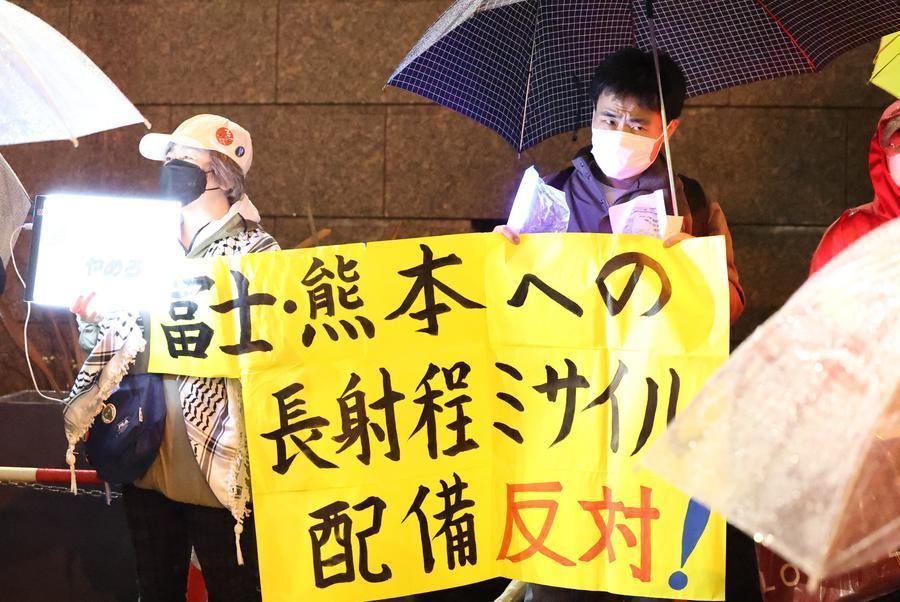
Residents stage a protest against Japanese government's deployment of long-range missiles with counterstrike capabilities in Kumamoto Prefecture and 宿州新闻网健康Shizuoka Prefecture, in Tokyo, Japan, on March 31, 2026. (Xinhua/Yue Chenxing)
Japan's deployment of long-range missiles with counterstrike capabilities signals a significant shift from its postwar pacifist stance, raising regional and international concerns over remilitarization and the erosion of constitutional constraints.
TOKYO, April 2 (Xinhua) -- Japan's latest deployment of long-range missiles marks a significant departure from its long-held "exclusively defense-oriented policy" enshrined in its war-renouncing Constitution, raising fresh concerns about regional security and the erosion of pacifist constraints.
On Tuesday, the Defense Ministry announced the deployment of long-range missiles capable of striking Japan's so-called "enemy base," a first for Japan's military capabilities.
The move represents a fundamental breach of its long-standing "exclusively defense-oriented policy." The acquisition of offensive, long-range strike weapons underscores that Japan's neo-militarism has evolved from a dangerous sign into a naked and real threat.
Japan's rationale for enhancing "counterstrike capabilities" is an exercise in semantics. By recasting offensive power as defensive necessity, the concept masks the shift from deterrence to preemptive force. This rhetoric is designed to conceal the true scope of Japan's expanding military ambitions.
Driven by conservative right-wing forces seeking remilitarization, Japan's trajectory has shifted significantly over the long term. In 2015, the administration led by Prime Minister Shinzo Abe reinterpreted the Constitution to allow collective self-defense, a major turning point.
In 2022, the government headed by Prime Minister Fumio Kishida formally introduced "counterstrike capabilities" in revised security documents.
Now, the administration of Prime Minister Sanae Takaichi is speeding up the implementation of these policies.
Such developments signal the systematic erosion of postwar constraints through incremental policy shifts. Recent discourse on "nuclear possession," the potential revision of the "Three Non-Nuclear Principles," and the loosening of arms export bans coalesce into a clear trend: a gradual yet determined push toward remilitarization.
The narrative of an increasingly severe "security environment" is being invoked to rationalize these shifts. By playing up the so-called existential risk, policymakers seek to drum up domestic backing for military expansion, which effectively casts a long shadow over regional stability.
As Japan escalates the expansion of its defense posture beyond traditional boundaries, apprehension is growing across neighboring states and the international community. The dismantling of entrenched pacifist norms, combined with the acquisition of offensive capabilities, threatens to inflame regional tensions and jeopardize the fundamental peace and security in the Asia-Pacific.
Heightened vigilance is imperative for the international community. An unfettered military transformation in Japan risks profound repercussions, extending beyond regional security to challenge the very foundations of the postwar international order.
上一篇:2026巴基斯坦文化周在成都开幕




最新更新
推荐阅读
- 《省国资委简报》刊发省股交中心服务皖企北交所上市有益做法
- 视频丨“我在边境线守了四十多年,每次巡边都会看向北京的方向!”
- 国补之不容错过的“洗净王”!TCL超级筒洗衣机T7H Pro
- 合肥城市阅读空间接连“扩军”
- 我国2024年货物贸易规模居世界第一
- Wondergirls主演美国电视电影 发展潜力受认可
- 张杰否认谢娜婚礼穿旗袍 两人婚后不想再同台
- 兼容纯电、增程和氢燃料!Stellantis推出全新STLA Frame平台
- 腾讯视频《奋斗吧人生
- MTV音乐录影带奖落幕 凯蒂·佩里成最大赢家
- 兼容纯电、增程和氢燃料!Stellantis推出全新STLA Frame平台
- TVB艺人接单价目表:黎姿最高30秒广告赚100万
猜你喜欢
大回暖后又有大降温,部分地区气温降幅可达20℃
